Microscopic Photos of the Deep Ocean Flux
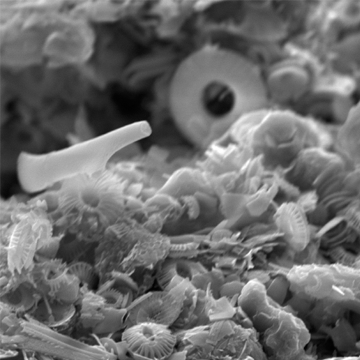
Very small particulates make up the bulk of the sinking flux material. This fine fraction is composed of the carbonate and siliceous skeletal remains of phytoplankton and zooplankton, fecal pellets and other detrital plankton debris, and suspended clays and other lithogenic material. Its composition is revealed by its chemical signature and by microscopy, such as this Scanning Electron Micrograph (SEM) of coccoliths and diatom fragments imbedded in a fecal pellet.
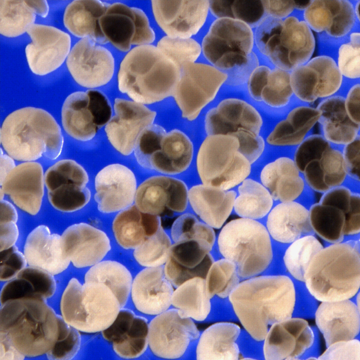
Foraminifera are a group of amoeboid protists that produce an elaborate shell often made of calcium carbonate. Incorporating their surrounding elements into their shells, foraminifera deposited in sediments are extremely useful in paleoceanography, and are used to reconstruct the ocean conditions and climate of the past. Pteropods (Thecosamata), a suborder of pelagic sea-snails, are composed of aragonite, an easily dissolvable form of calcium carbonate. The intricate shells of radiolaria are composed of silicate.
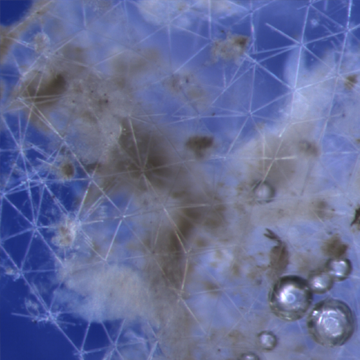
Many gelatinous zooplankton such as Salps and even some of the smaller hunters of the mesopelagic community, the pteropods, utilize feeding webs, which are often a sticky mucus consistency, for concentrating and collecting prey. When these structures become clogged, they can be discarded and rapidly sink to depth, playing an important role in the aggregation and relatively rapid transfer of particles from the surface waters to the depths of the ocean. Large particles (such as pieces of Sargassum from the surface) and biogenic aggregates (such as fecal pellets) also provide a rapid transfer of elements to the deep.
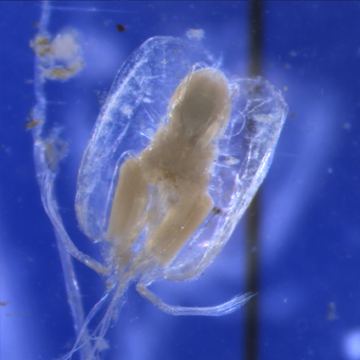
While not a major component of the trap samples, macro-zooplankton can find their way into the samples where they are immediately preserved by the mercuric chloride poisoned seawater brine. These “swimmers” are removed and archived during the processing. The zooplankton and occasional small fish collected in the trap samples represent a snapshot of the surrounding community at that time. The traps often capture reproductive events such as larval “blooms” of midwater species.
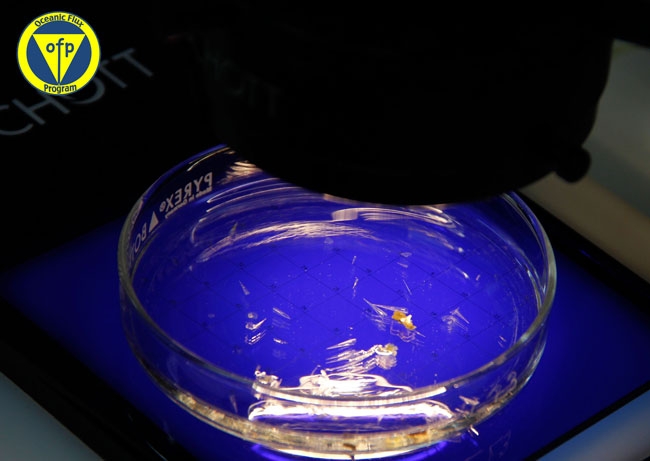
For each OFP sample, all particles >125µm are photographed and documented for image archives
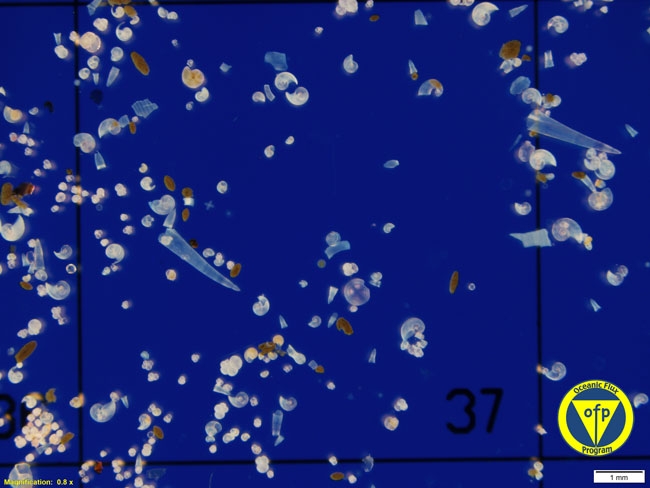
Every 1cm2 grid of each OFP sample (>125µm) is photographed for the image archive
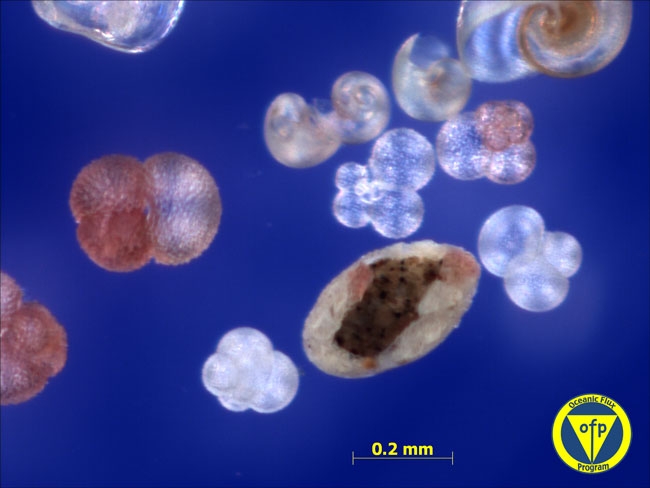
3200m: Foraminifera Globigerinoides ruber, pteropods and interesting particle
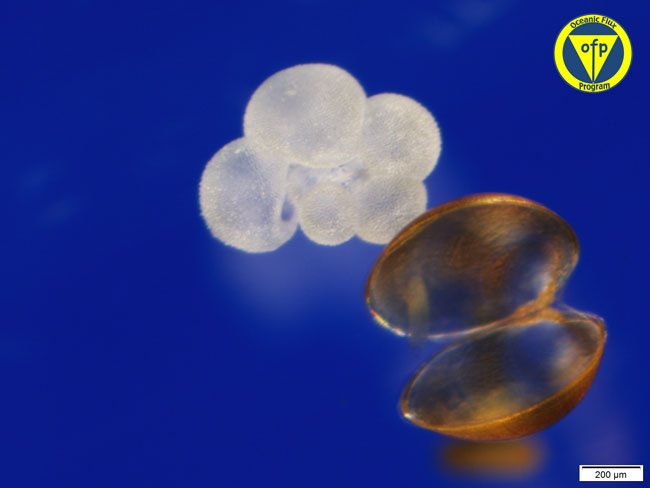
3200m: Foraminifera Globigerinoides & bivalve shell
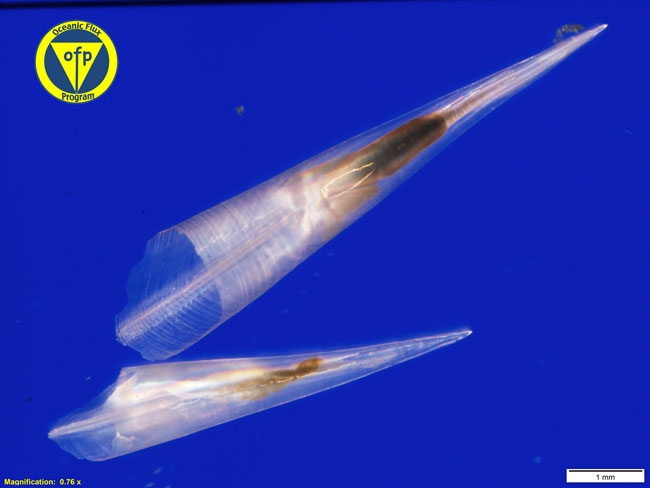
500m: Shells of pteropod Styliola subula
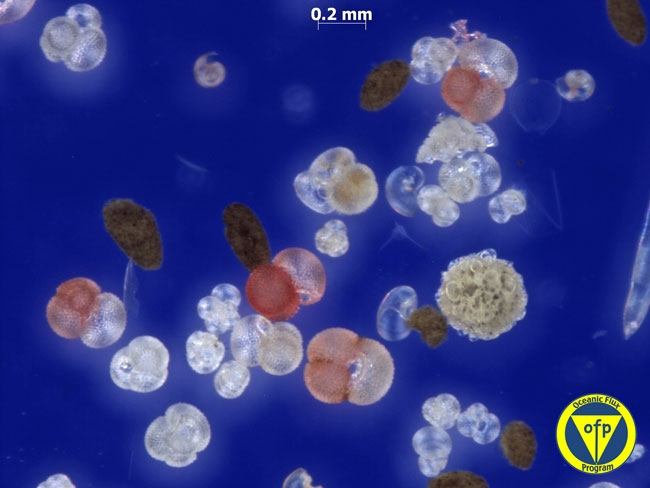
3200m: Fecal pellets, & foraminifera (Globigerinoides ruber & agglutinated juvenile sphere)
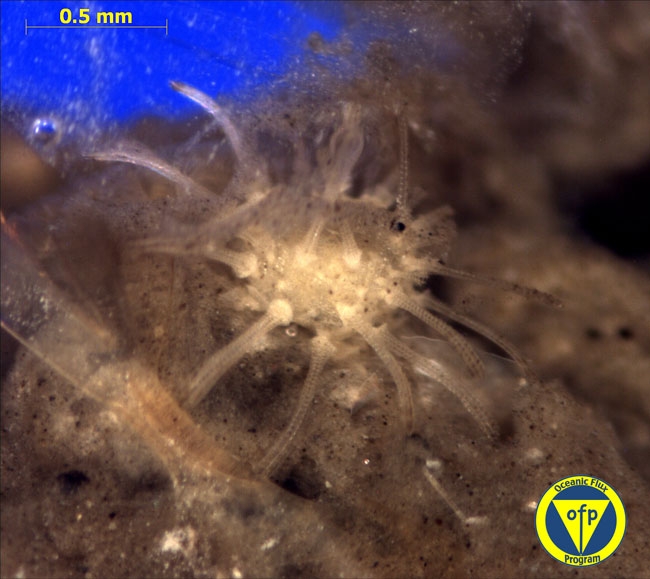
1500m: Suspected deep-sea echinoderm larva
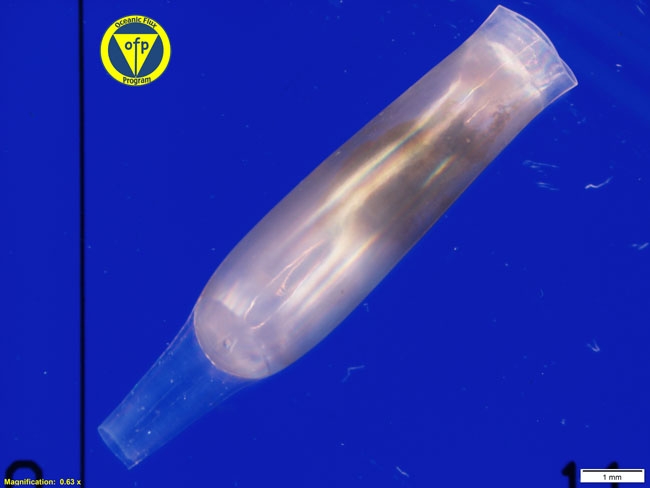
500m: Pteropod Cuvierina atlantica
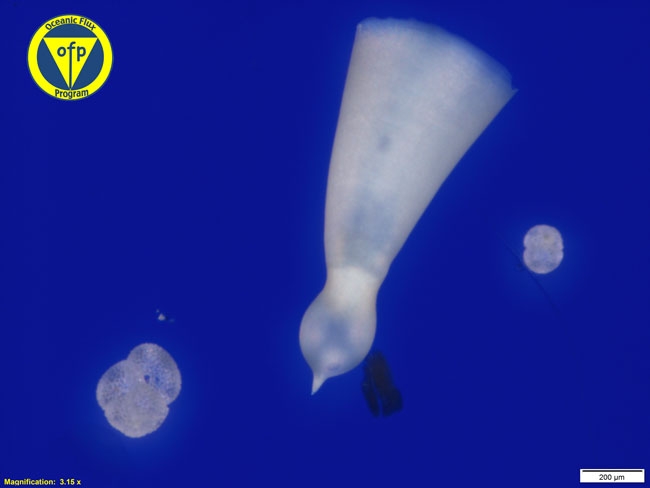
500m: Juvenile pteropod Clio cuspidata shell (center)
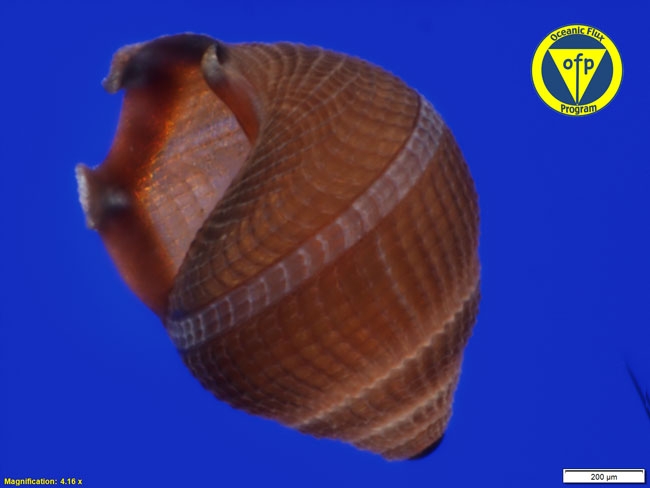
1500m: Gastropod shell
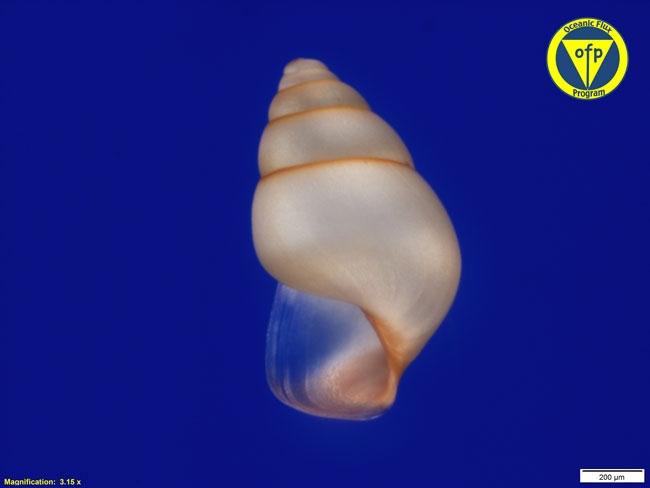
1500m: Pteropod shell of Limacina bullimoides
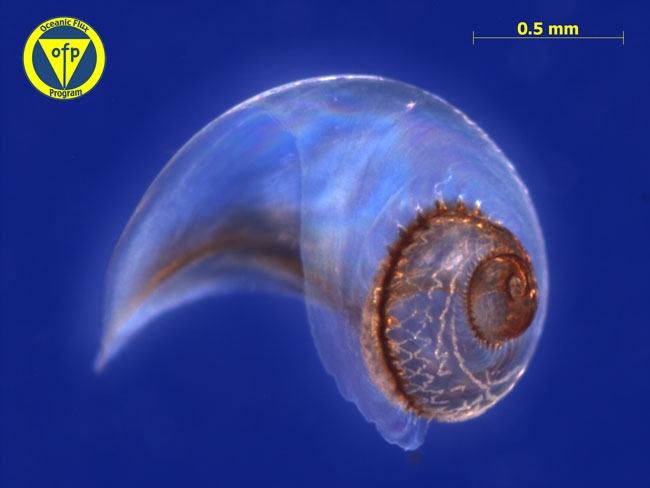
3200m: Pteropod shell of Peracle reticula
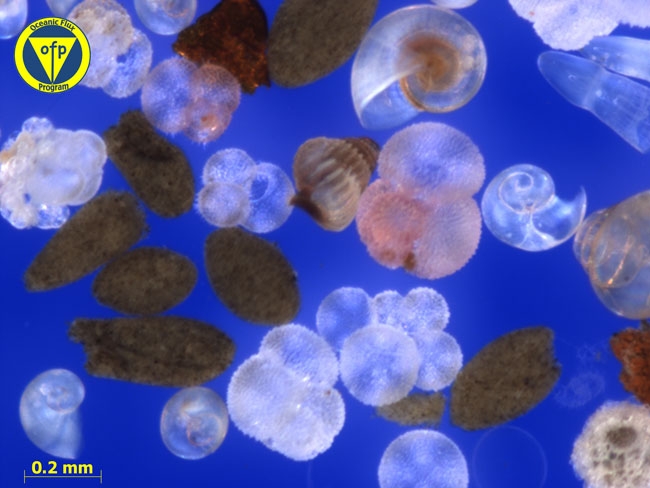
3200m: Fecal pellets, pteropod shells and foraminifera
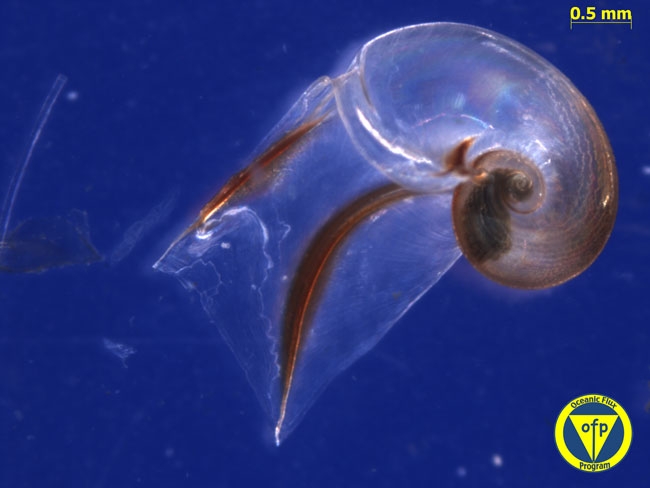
500m: shell of pteropod Peracle tricantha
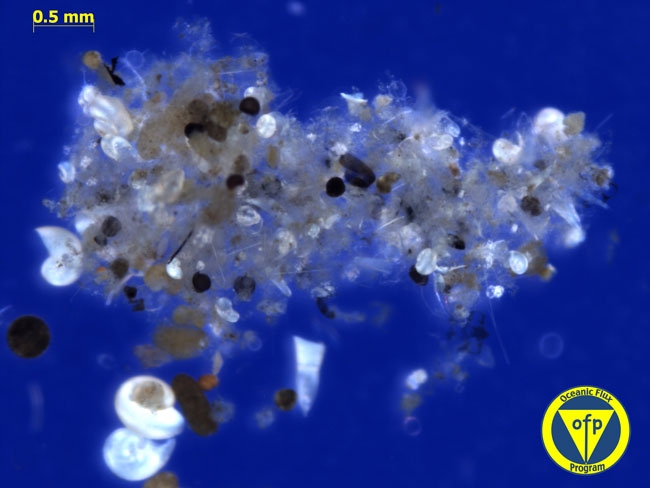
3200m: Sinking aggregate
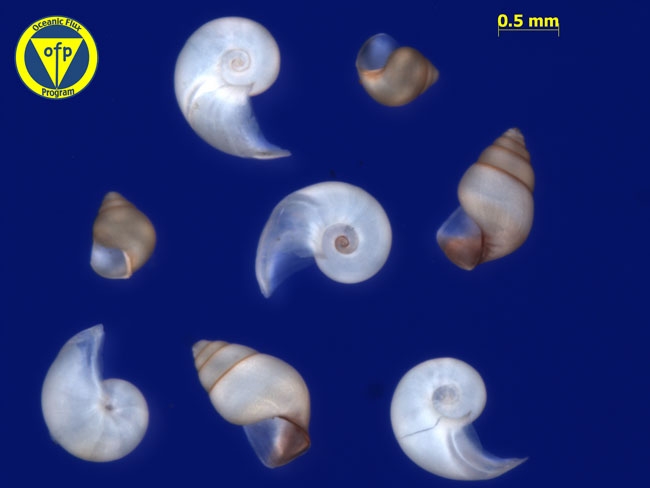
500m: Pteropod Limacina inflata, L. trochiformis & L. bullimoides shells
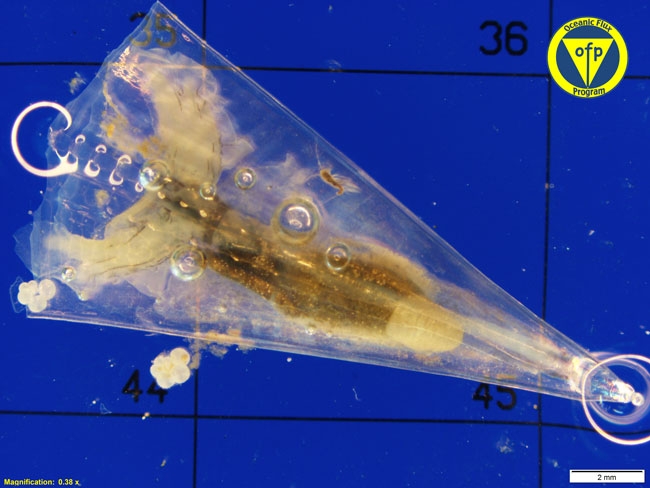
500m: Pteropod Clio pyramidata
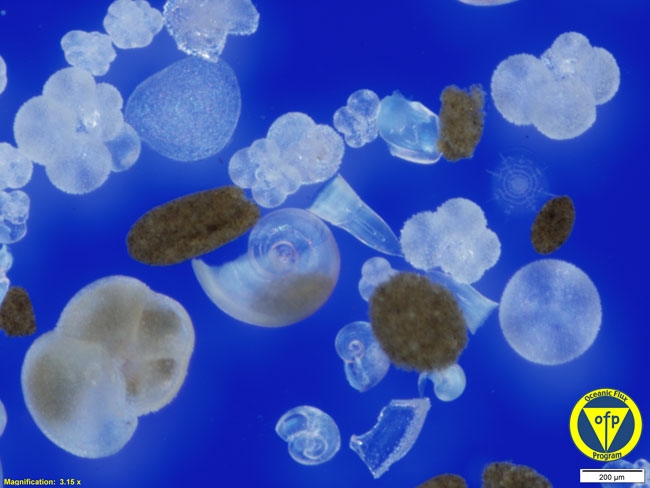
3200m: Foraminifera & pteropod shells and fecal pellets
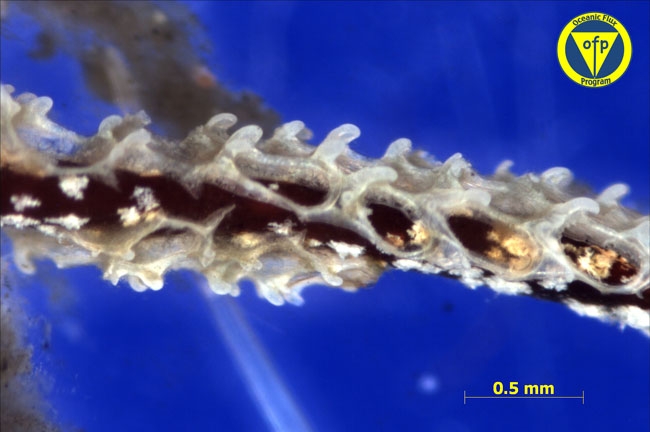
3200m: Sinking Sargassum blade with epiphytes
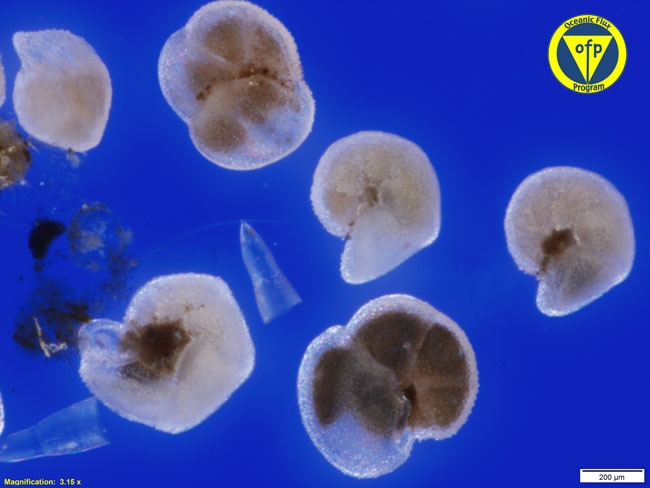
500m: Foraminifera Globoratalia truncatulinoides
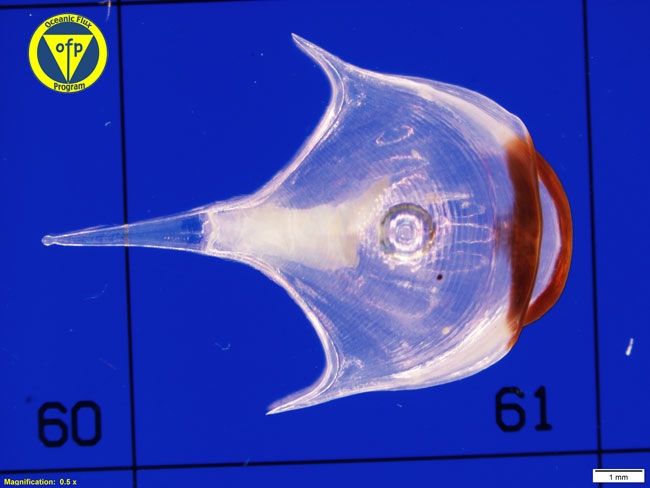
3200m: Pteropod shell of Diacria trispinosa
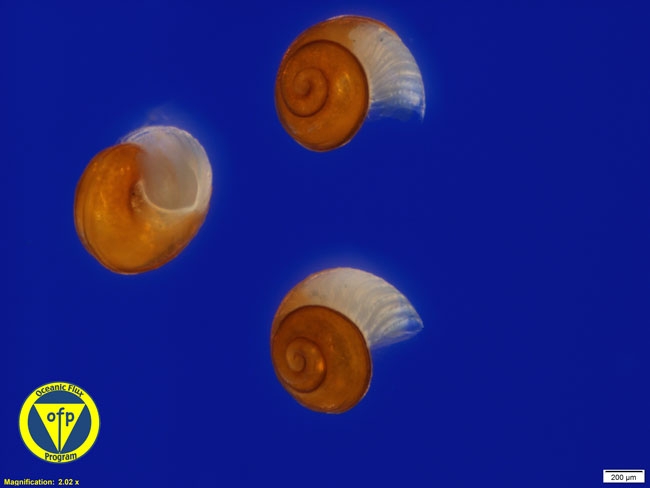
3200m: Gastropod shells
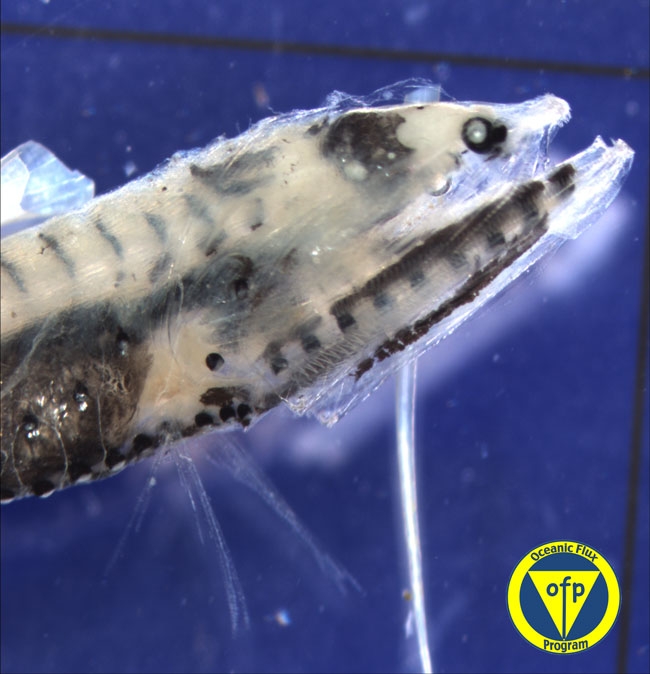
500m: Cyclothone deep sea fish
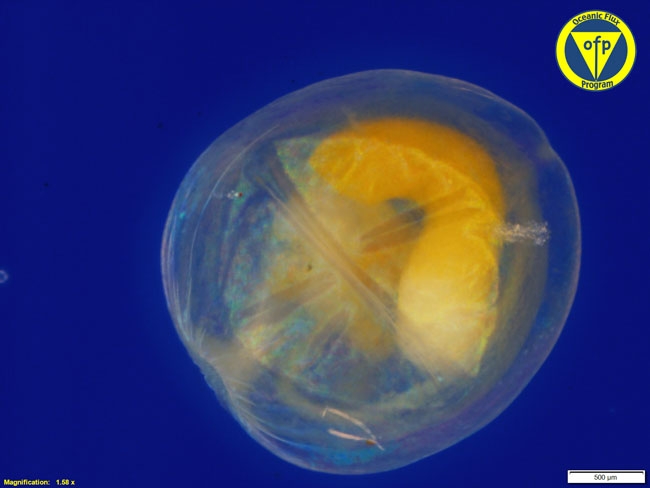
3200m: Microzooplankton
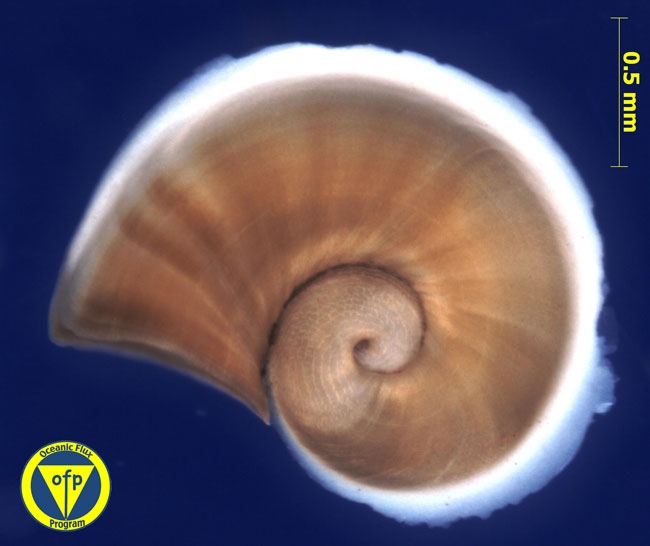
500m: Heteropod Atlanta peronii shell
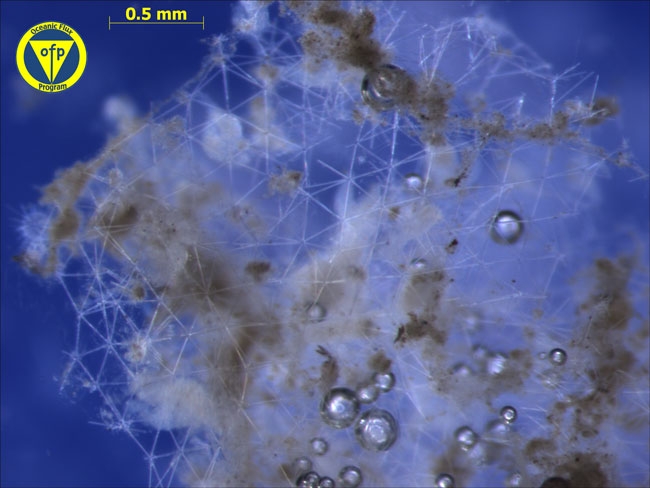
1500: Phaeodarian feeding net
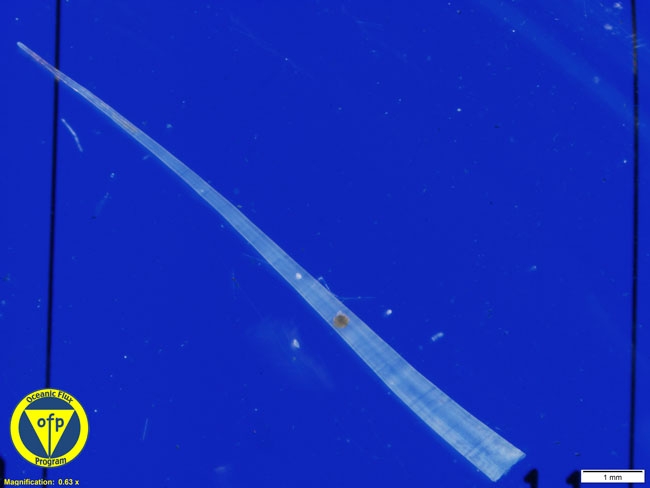
500m: Pteropod shell of Creseis clava
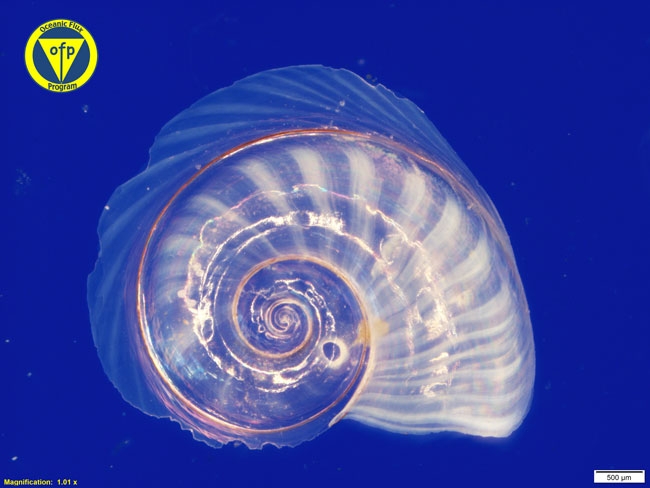
3200m: Heteropod Atlanta peronii
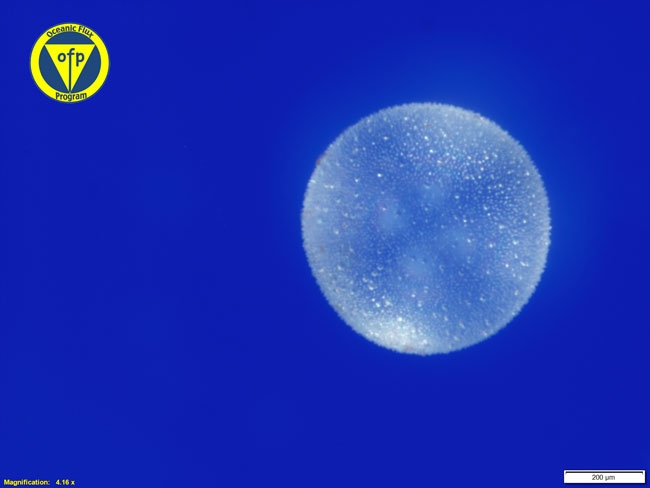
1500m: Foraminifera Orbulina universa
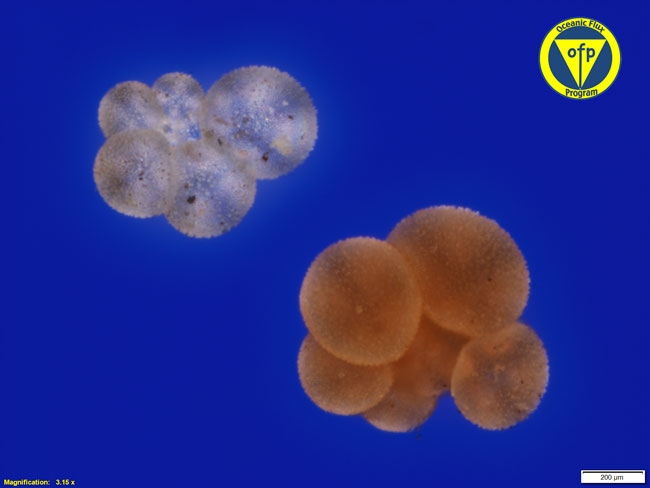
500m: Foraminifera Globigerinoides spp.
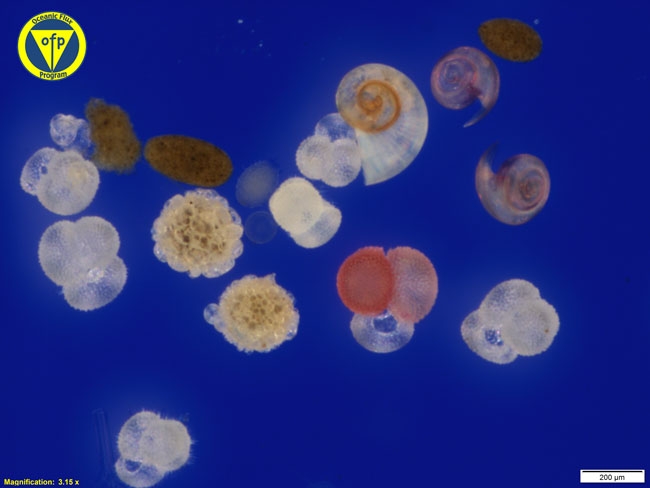
3200m: Fecal pellets, agglutinated foraminifera spheres, G. ruber & pteropod shells
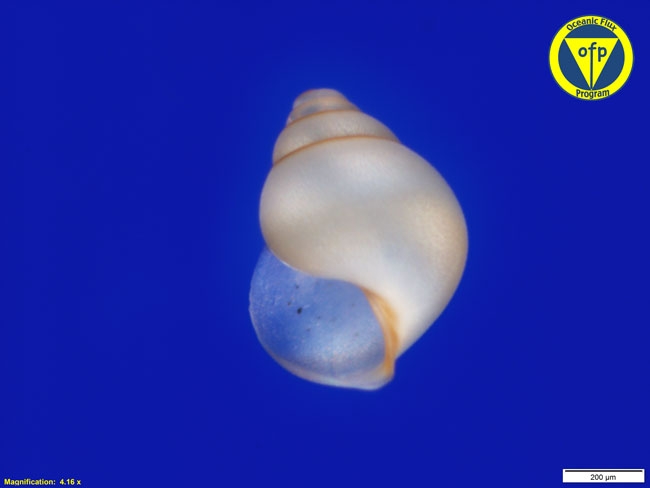
500m: Limacina trochiformis
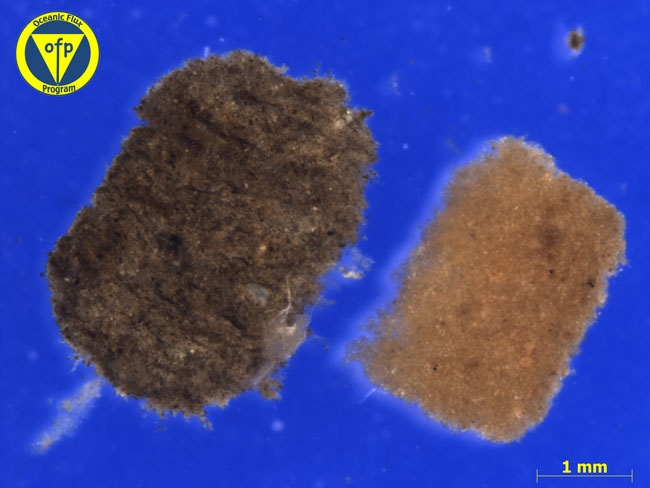
3200m: Sinking salp fecal pellets